Social Work (MSW)
Find your path forward with a Master of Social Work (MSW) from UNC Pembroke. We offer a Traditional MSW and an Advanced Standing MSW. Designed for working adults, the program offers flexible options. Choose to take classes online, hybrid, part-time, full-time or advanced standing. Be prepared to make an impact in clinical, healthcare and community settings.
Degrees
| Semester | Application Deadline | Classes Start |
|---|---|---|
| Summer I, '27 (Adv. Standing) | Jan. 15, 2027 | May 24, 2027 |
| Fall '27 (Traditional) | Feb. 1, 2027 | Aug. 16, 2027 |
*Applications for both Summer and Fall '27 open on Sept. 1, 2026
The MSW Experience
UNCP's MSW program combines rigorous academics with real-world experience. You'll gain practical skills both in the classroom and through a faculty-supported practicum based in North Carolina. Rooted in social justice and aligned with the NASW Code of Ethics, the program prepares you to serve diverse, rural and underserved communities — whether you're beginning your social work journey or building on a BSW.
With flexible options — including full-time or part-time schedules and hybrid or fully online delivery — you can earn your degree on your terms.
Full Time Plan of Study 2 Years
Part Time Plan of Study 3 Years
Part Time Plan of Study 4 Years
Virtual Information Sessions
Click the links to register.
Fast-Track Your MSW Experience with Advanced-Standing
Already have a CSWE-accredited BSW?
With Advanced Standing, you can complete your Master of Social Work in just 12 months
full-time or 24 months part-time. This accelerated pathway puts you on the fast track
to a rewarding career grounded in advocacy, service and meaningful change.
Plan of Study 1 year Plan of Study 2 year
Certificate in Substance Use Disorder Treatment and Recovery
Gain specialized training in a growing field with UNC Pembroke’s Graduate Certificate
in Substance Use Disorder Treatment and Recovery. Designed for current Master of Social
Work students, this 12-hour program builds essential skills to assess, treat and support
individuals facing substance use challenges. Approved by the NC Addictions Specialist
Professional Practice Board, the certificate also meets Criteria C for LCAS eligibility.
How to Prepare
To be eligible for admission, applicants must meet the following GPA and degree requirements based on their preferred program format:
Fully Online Program:
- Bachelor's degree from a regionally accredited university
- Minimum 3.0 GPA (overall or in the major) or a graduate degree with a 3.0 GPA
Hybrid Program (on-campus sessions):
- Bachelor's degree from a regionally accredited university
- Minimum 2.75 GPA (overall or in the major) or a graduate degree with a 2.75 GPA
Advanced Standing Program:
- Bachelor of Social Work (BSW) from a CSWE-accredited program (or international equivalent recognized by CSWE)
- Degree must have been earned within the last 5 years
- Minimum 3.2 overall GPA
GPA Exceptions (Hybrid Program Only):
Applicants with a GPA below 2.75 may still be considered if they meet one of the following:
- 3.0 GPA in the last 60 hours of undergraduate coursework
- 3.0 GPA in a completed graduate degree
- 3.0 GPA in at least 9 hours of completed graduate-level coursework
- GRE scores: 148 (Verbal), 145 (Quantitative), 3.5 (Analytical Writing)
- A high composite score on admission materials (essay, recommendations, etc.)
All applicants must demonstrate foundational knowledge in key academic areas.
Applicants without a BSW must have completed:
- 9 credit hours in humanities/fine arts
- 9 credit hours in social sciences
- 3 credit hours in statistics
Applicants with a BSW must have completed:
- 3 credit hours in statistics
CLEP Exams:
Some prerequisite areas may be fulfilled by CLEP exams. Learn more at CLEP .
You must submit at least three recommendations from academic or professional references who can speak to your:
- Readiness for graduate-level study
- Commitment to social work values
- Professionalism, leadership and/or advocacy experience
Tips : Avoid personal references. Choose individuals who are familiar with your academic work, volunteer service or job performance in human services settings.
The UNCP Master of Social Work Program aims to prepare students to be competent practitioners across North Carolina and beyond. With a focus on rural and Indigenous populations, the Advanced Generalist Program provides students with the opportunity to engage in competency-based education across all social work domains (micro, mezzo, macro).
A. Short Answers (no more than 250 words per question).
The following short-answer questions will assist application reviewers in understanding the applicants’ academic and professional goals for pursuing a Master's degree in social work at UNCP. It is important to communicate how you have developed as a result of these experiences, what knowledge you have gained, and how these experiences will affect your approach to your social work education and professional practice. Include comments on the factors that contributed to your choice of graduate-level social work education and why you are making this choice at this time.
Responses to the short answer questions should reflect a basic understanding of and congruence with the National Association of Social Workers Code of Ethics. Answers should display a critical thought process, address the questions asked, and should be no more than 250 words. Any form of plagiarism or use of Artificial Intelligence will not be accepted.
Question 1: Describe your academic journey and your future social work goals. Include any notable achievements and accomplishments (academic work or volunteer) and perseverance in the face of adversity, oppression, socioeconomic disadvantage or other challenges faced. Explain why you believe you are ready for the rigor of the graduate program.
Question 2: Discuss your career goals and what you expect to be doing within five years and ten years. Explain how the MSW at UNCP will assist you in meeting your academic and professional goals.
Question 3: Discuss your commitment to social justice. Include any previous experiences or interest in advocacy for social justice.
Question 4: Explain your commitment to rural social work. Include experience working with rural populations or within rural communities.
Question 5: Describe your approach to working with populations different from your own. Include any significant experience in communities that vary from your home community and/or bilingual skills.
Question 6: Discuss any leadership roles you have held, or plans for leadership in the future. Include characteristics you see in leaders, and those that you hold, and areas of growth. Explain how you see them being useful in the MSW program and beyond.
B. Social Justice Topic/Problem (2-3 pages)
Describe a social problem or social justice topic that you perceive as significant. Discuss it in relation to the following four areas:
Describe the societal contributions to the origin and maintenance of this problem.
Clearly discuss reasons this problem deserves public attention and resources.
If relevant, integrate any personal experiences that have contributed to your identification with and understanding of the problem.
Identify and explain possible methods of addressing the social problem, including social work leadership roles you might undertake.
All MSW students are required to complete an in-person field practicum at an approved health or human services organization in North Carolina. This applies even if you're in the fully online program.
Hours Required:
- Traditional MSW: 930 hours
- Advanced Standing: 500 hours
Field education is an essential part of MSW training. You will gain hands-on experience through a required North Carolina-based practicum. Depending on your path, you'll complete either 500 or 930 hours in a setting that matches your goals and supports licensure readiness.
Beyond Graduation
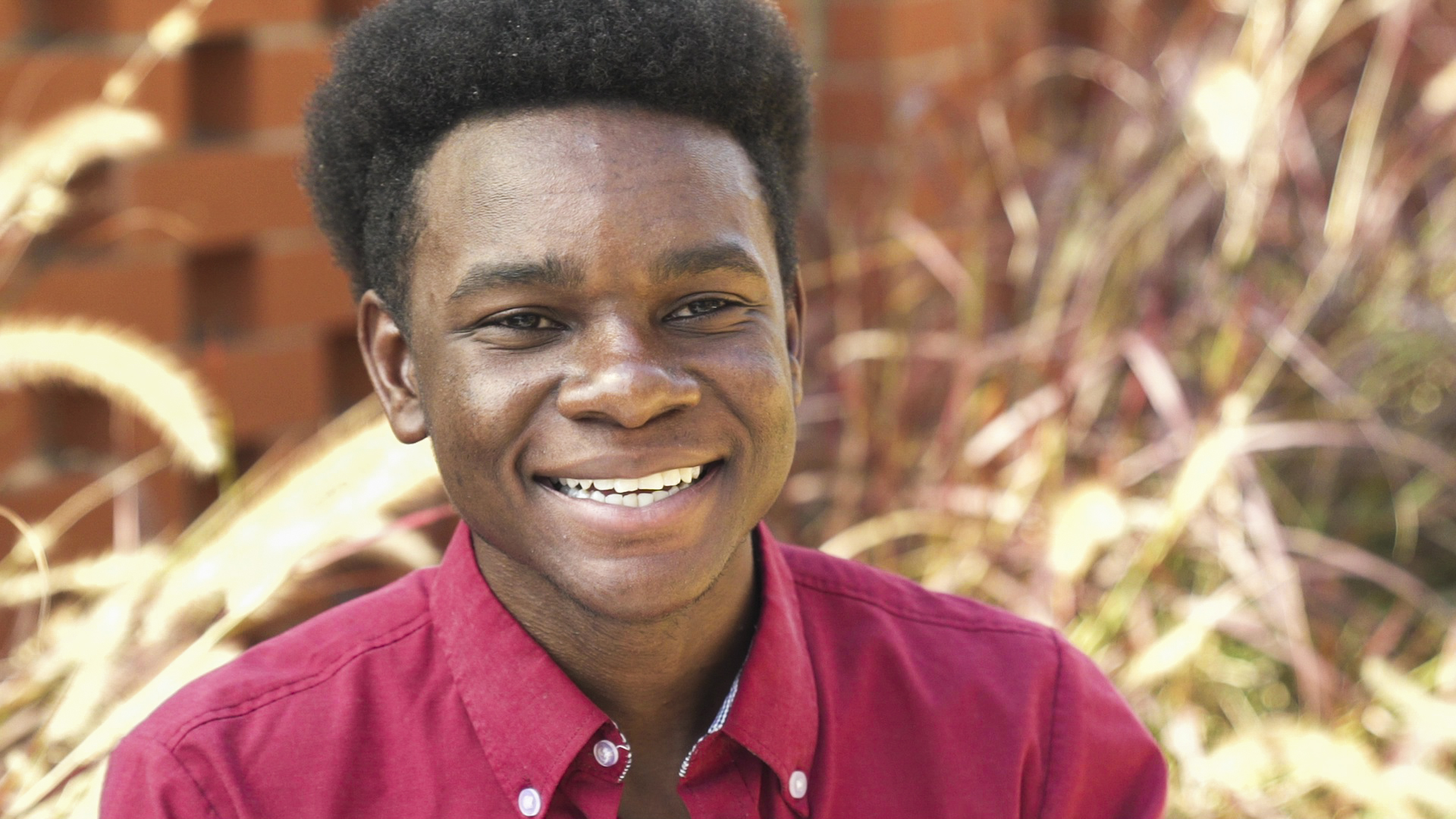
This program is helping me reach my ultimate goal — to help people. Earning my clinical social work license and getting into the field quickly means I can start making a difference right away. Helping others while doing what I love — that's the dream.
Matthew Miles
Master of Social WorkCommon Careers
- Clinical social work
- Substance use disorder treatment
- Medical and school social work
- Community advocacy
- Public policy and research
- Nonprofit management
- Trauma-informed care

Have questions?
or call us at 910.521.6271
Faculty & Staff

Shannon Cousineau
Assistant Professor of Social Work - MSW Program Director
shannon.cousineau@uncp.edu910.775.4267


Similar Programs


UNCP Social Work is accredited by the Council on Social Work Education's Board of Accreditation. Accreditation of a baccalaureate or master's social work program by the Council on Social Work Education's Board of Accreditation indicates that it meets or exceeds criteria for the assessment of program quality evaluated through a peer review process. An accredited program has sufficient resources to meet its mission and goals and the Board of Accreditation has verified that it demonstrates compliance with all sections of the Educational Policy and Accreditation Standards. Accreditation applies to all program sites and program delivery methods of an accredited program. Accreditation provides reasonable assurance about the quality of the program and the competence of students graduating from the program.