NSF Renews Nearly $2 Million for UNCP's COMPASS STEM Program
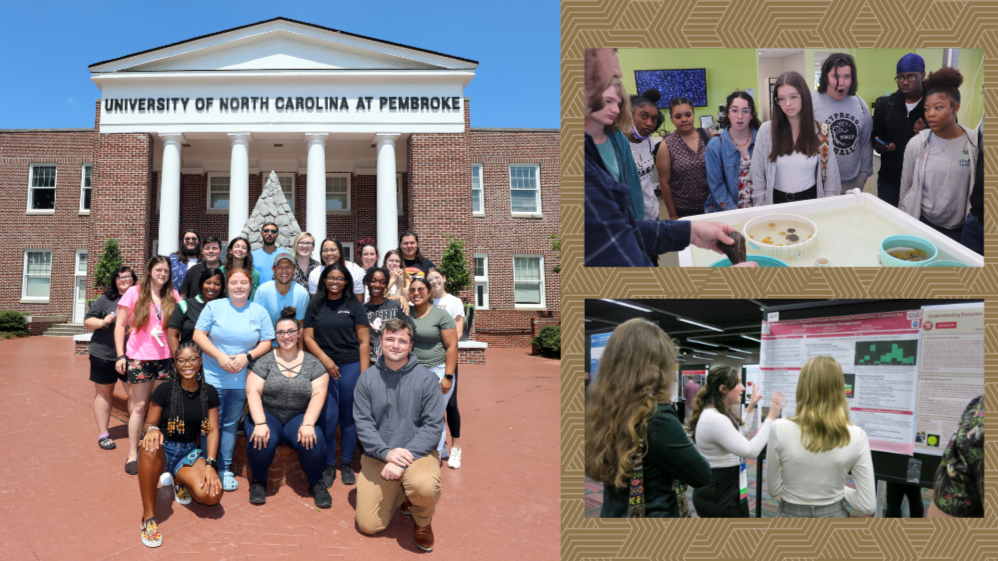
After helping dramatically improve retention and graduation rates among STEM students, UNC Pembroke's COMPASS program has received nearly $2 million in renewed funding from the National Science Foundation to support future generations of scientists, researchers and healthcare professionals.
The grant will support low-income students majoring in biology, chemistry, environmental science and geoscience who enter UNCP in fall 2026, 2027 and 2028. Students selected for the program will receive scholarships averaging nearly $12,900 annually, along with academic, professional and personal support designed to help them succeed in STEM fields. The scholarships will support students through degree completion.
The funding represents the third iteration of the grant-funded program at UNCP, known as COMPASS-3. The renewal follows more than a decade of measurable success.
Before the program launched in 2014, nearly 70% of STEM students at UNCP had left their major by their fourth year. Today, COMPASS participants have a 76% persistence rate in science, while recent cohorts have achieved nearly a 100% four-year graduation rate.
For Dr. Maria Santisteban, professor of biology and one of the program's founders, those outcomes reflect the power of combining financial support with intentional student development.
"The scholarships are important, but COMPASS has never been solely about paying for college. It's about creating a system of support that helps students see themselves as scientists, researchers and professionals."
Officially titled “Advancing STEM Retention and Career Readiness through Comprehensive Support Systems,” COMPASS was designed to address barriers that often prevent low-income and rural students from persisting in STEM majors.
The National Science Foundation recognizes an ongoing need to increase the number of domestic STEM graduates, particularly among students from rural communities who may have limited exposure to STEM careers, research opportunities and professional networks.
“Some of them don't really know what research is,” Santisteban said. “They think it's just writing papers as they did in high school. Others feel like it's only for a certain type of student, so they don't even try to get involved in research outside of class.”
COMPASS students begin with a math and chemistry bootcamp before their first semester and spend the following years exploring research opportunities, visiting graduate schools and industry partners, attending professional conferences and building relationships with scientists and healthcare professionals.
Research stipends allow students to focus on hands-on learning experiences, while select participants are nominated to attend a national conference hosted by the National Science Foundation and the American Association for the Advancement of Science. Last semester, four UNCP students traveled to San Diego for the event.
Senior biology major Jamori Gerald was among the students selected to attend the conference.
“I met new people and learned a lot of things revolving around the science world,” he said. “Every individual I met was very professional and left me wanting to know more.”
Gerald said the site visits during the school year were also beneficial. “They gave a better understanding of different opportunities after graduation and how we would use science in real-world scenarios,” he said.
Building confidence in STEM begins long before students apply for internships, attend conferences or conduct independent research. Dr. Rachel Smith, a member of the COMPASS project team and Chair of UNCP Chemistry and Physics, said the program introduces students to research opportunities early to help them see themselves as scientists from the beginning.
“To overcome the perception that research is intimidating, COMPASS scholars will work in small groups with faculty to learn basic laboratory skills and then shadow upper-level students who are already engaged in faculty-mentored research projects,” Smith said. “This early exposure demystifies the research process and helps students build the confidence needed to become involved themselves.”
The students also have an annual retreat, one-on-one mentoring and a dedicated space to study or take a break.
“At the end of the day, if students don't feel like they belong, they're not going to stay in STEM,” Santisteban said. “So, we really focus on building that sense of community, whether it's through the retreat, time in the student lounge, or even our site visits, where they travel together, share meals and build those connections that make a big difference.”
For UNCP alumna Gretchen Gillenwater, who's now pursuing her Master of Arts in Geography at UNC Charlotte with a focus on the social aspects of meteorology, the program was life-changing.
“The COMPASS program allowed me to pursue dreams I didn't know existed,” she said. “I had the academic and financial support to go above and beyond at Pembroke and apply for internships I never thought I would get into. I still remember Dr. Santisteban showing me the NSF webpage full of internships and pointing me to the National Weather Service research experience, which changed my childhood dream for the better.”
With the grant renewal in place, program leaders hope to create similar opportunities for the next generation of STEM students.
Interested in COMPASS?
The program is open to incoming freshmen and community college transfer students who are U.S. citizens or permanent residents and have completed fewer than 61 credit hours. Eligible majors include biology, chemistry, environmental science and geoscience.
Applicants must submit two letters of recommendation, SAT scores and a personal statement. Additional information is available at uncp.edu/COMPASS. Students who have been accepted to UNCP and completed the FAFSA may contact Dr. Maria Santisteban at maria.santisteban@uncp.edu for more information.