Students Witness the Beauty of Impermanence Through Buddhist Sand Mandala
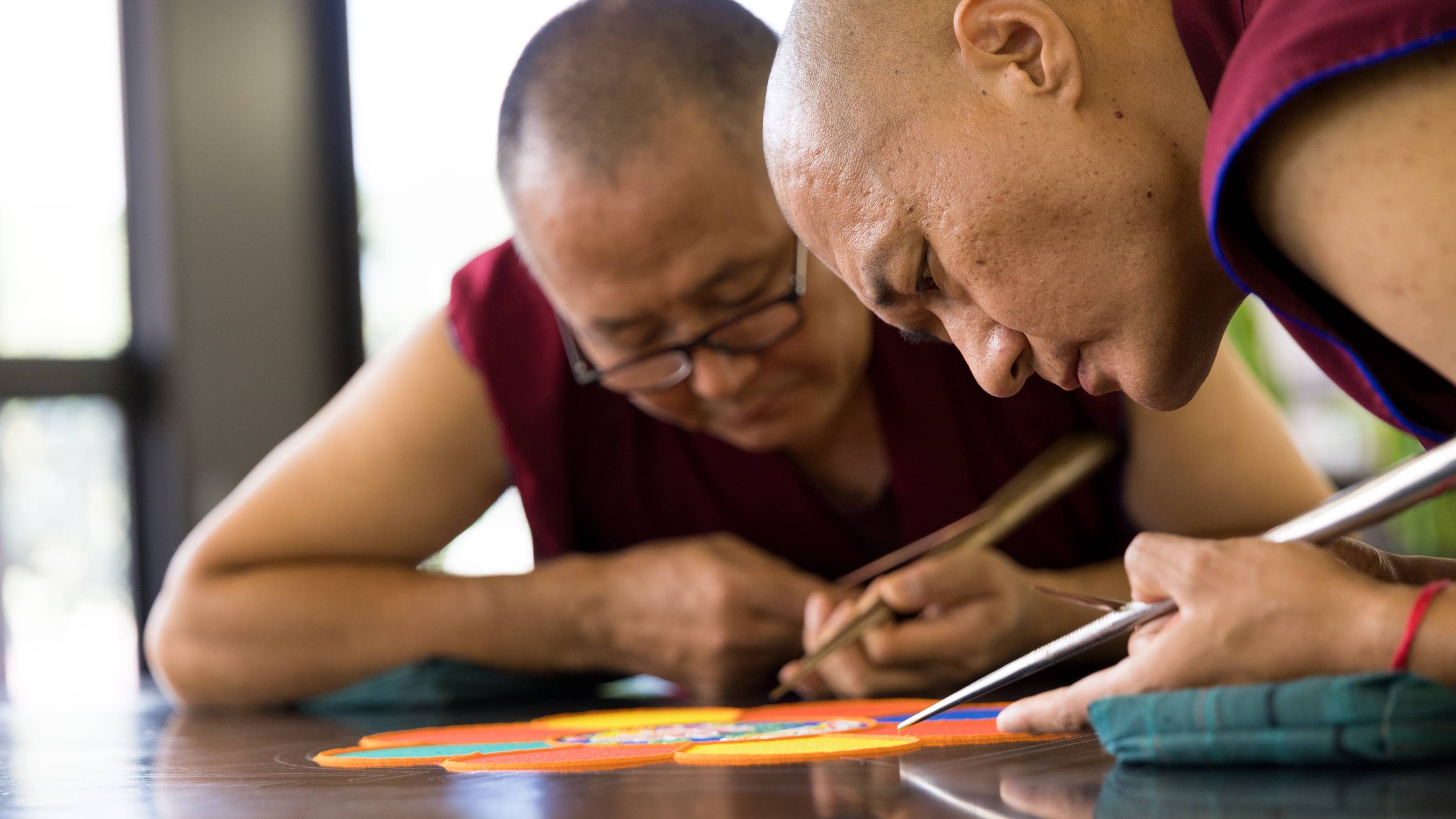
For four days, students passing through the Chavis Student Center mall at UNC Pembroke watched something extraordinary take shape — one grain of colored sand at a time.
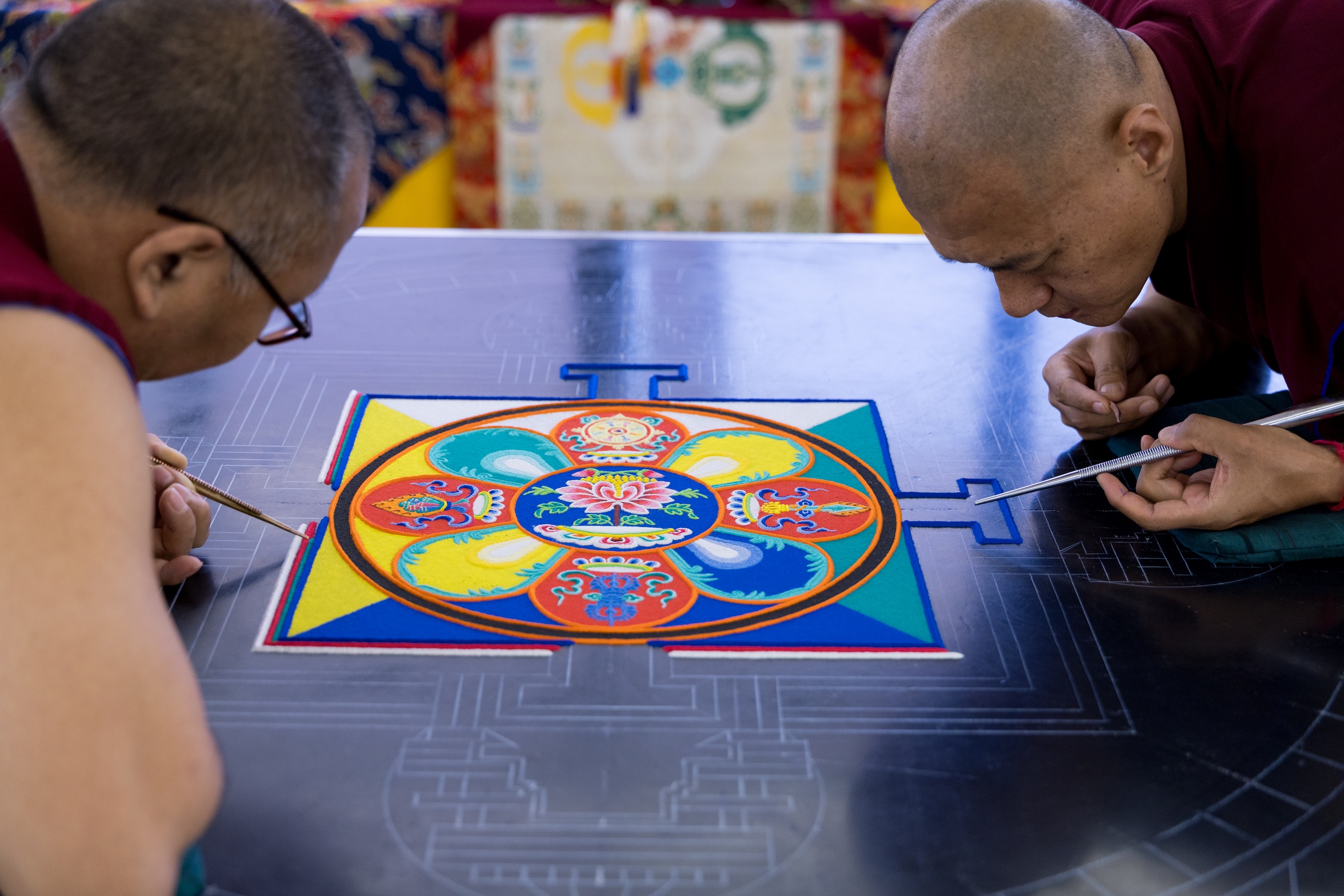
Six Tibetan Buddhist monks from Drepung Loseling Monastery in Atlanta spent nearly a week creating a 4½-foot sand mandala, carefully placing thousands of grains of colored sand to form an intricate design.
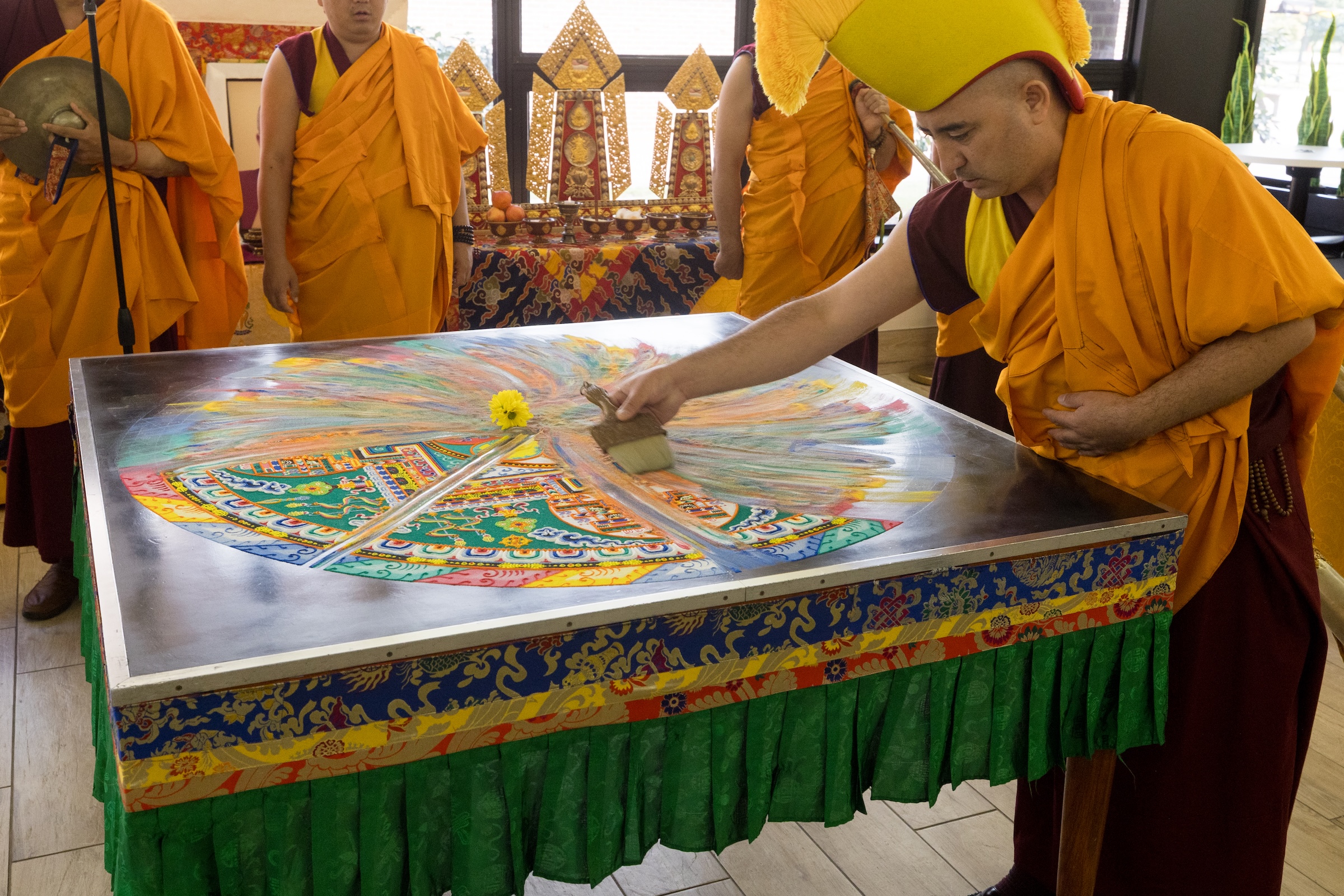
But the finished artwork was never meant to last. During a sacred closing ceremony, the monks dismantled the mandala, demonstrating one of the central teachings behind the practice: impermanence.
“I hope students take away the understanding that it is okay to release things,” said Danquis Daniel, associate director for Campus Engagement, who organized the visit. “Lots of times we hold onto things that we shouldn’t. Even with all the beautiful artwork they created, the lesson is that we don’t need to hold onto everything.”
The monks, originally from India, are trained in the art of creating sand mandalas. The tradition requires years of study and practice in art, geometry and philosophy.
The mandala's creation requires extraordinary concentration and patience. Using small tools, the monks carefully placed colored sand according to a precise pattern.
For Carla Rokes, a studio art professor, the precision of the work was immediately striking.
“As an artist, first I’m amazed by the perfection of the design and how they can have the patience to stand over this for a week and create this radial symmetry,”
Rokes said. “It was an absolute perfect balance of color, line and shape. Then to witness the spiritual side of it — it was breathtaking.”
For those who stopped to watch the artwork take shape, the experience was designed to inspire them to slow down, reflect and consider the things in life that can be difficult to let go.
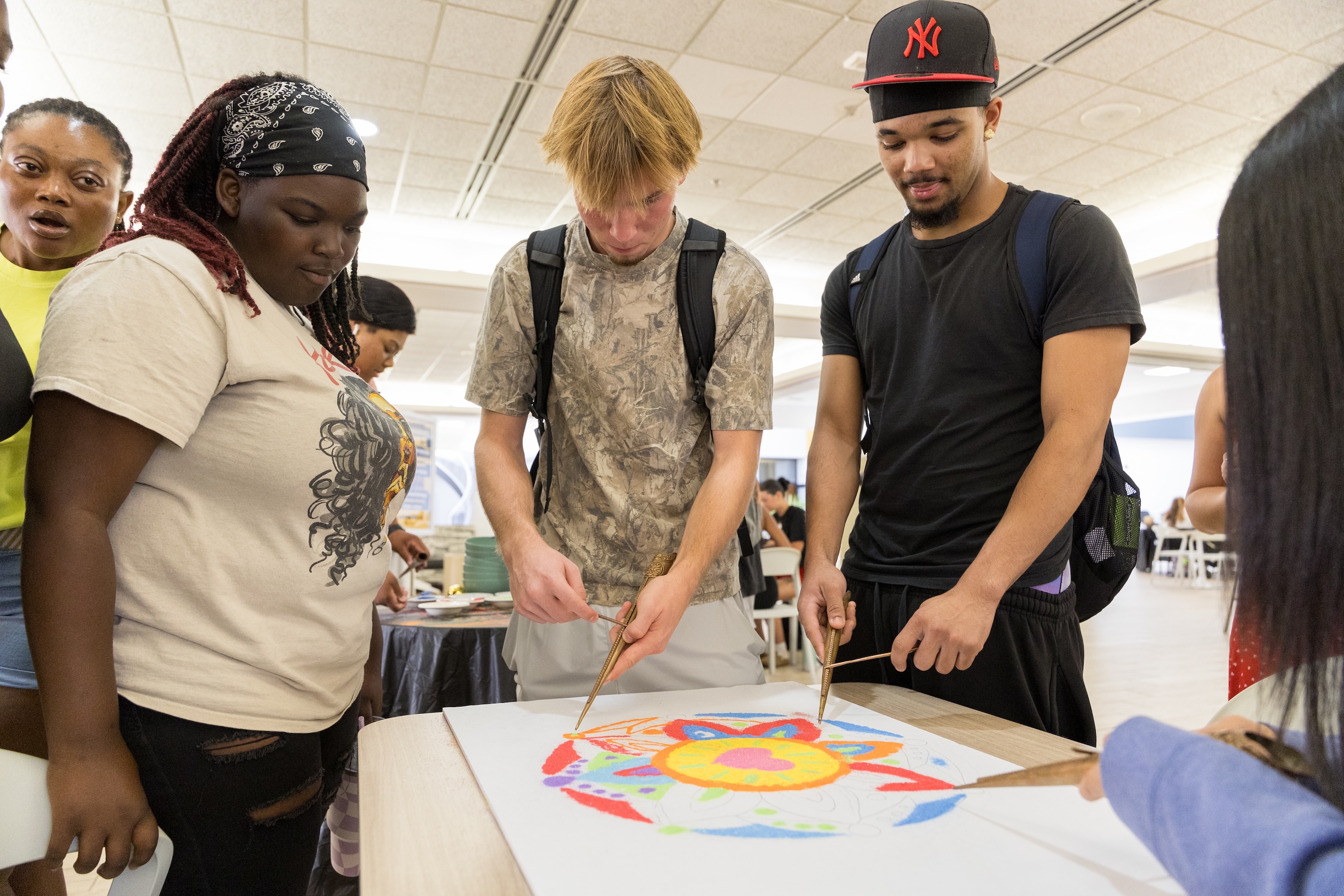
Students were also invited to create a separate community sand mandala. After the monks completed their work, students could collect some of the sand to take with them.
“We want to share this message of inner qualities with the world, kindness, how important it is, and send that message to the world through this mandala,” said Tsewang, one of the monks who created the mandala at UNCP.
The dismantling of the mandala is an intentional part of the tradition, he said. Rather than preserving an artwork that required hours of painstaking labor, the monks demonstrate the impermanence of all things and the importance of letting go of attachment.
Kelly Bonilla-Villatoro, an accounting major, was drawn to the message of love and kindness associated with the monks’ visit.
“I didn’t realize that was the whole message in the beginning — things are always things; nothing will be here forever,” Bonilla-Villatoro said. “I needed that in this moment. School has been very stressful for me. I just now got back on my feet with my assignments. Taking a break to watch this ceremony has been lovely and helped me to remember those basic things.”
Dr. Daniel LaDu, the Adolph Dial Distinguished Scholar in the American Indian Studies department, saw a connection between the mandala and the college experience itself.
“An early anthropologist, Victor Turner, popularized this idea of liminal space,” LaDu said. “College itself is a liminal space. The whole time you are working on your degree, you are in this space, you are developing skills, you are putting in the time and making something beautiful. It’s about enjoying that process.”